

Bangkok’s huge. It's crowded and busy and can really test your patience. Still, it’s not as hard to get around as it first seems. You’ve got elevated trains, underground lines, buses, river boats, regular taxis, and motorcycle taxis. The best pick depends on how far you’re going, what time it is, and how bad traffic looks.
No single mode cracks all the problems. Sometimes, you’ll jump in a taxi for a couple of blocks. For long hauls across the city, the trains usually smoke anything stuck on the roads. If you combine options, everything feels smoother. That's what this blog is about—making day-to-day travel in Bangkok simpler.
Bangkok transportation covers several systems, each useful for a different kind of journey. The trick is knowing when to switch.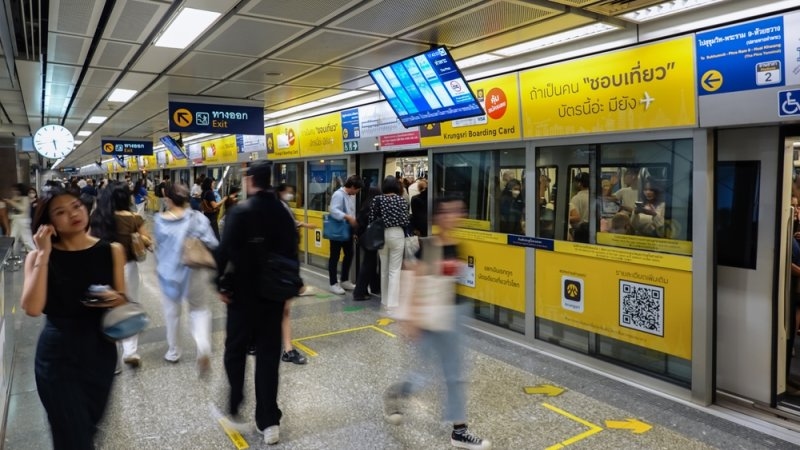
Bangkok MRT is particularly useful when your destination sits along the underground network rather than the elevated rail routes. It connects important commercial, residential and tourist areas while avoiding much of the road congestion above. For example, a traveller moving between central neighbourhoods may save substantial time using Bangkok MRT instead of sitting in traffic.
Bangkok MRT also becomes useful when rain makes walking uncomfortable. Stations can be busy, but trains run frequently. Bangkok transportation becomes much easier when the MRT is treated as part of a wider route, with walking, BTS or taxis filling the gaps.
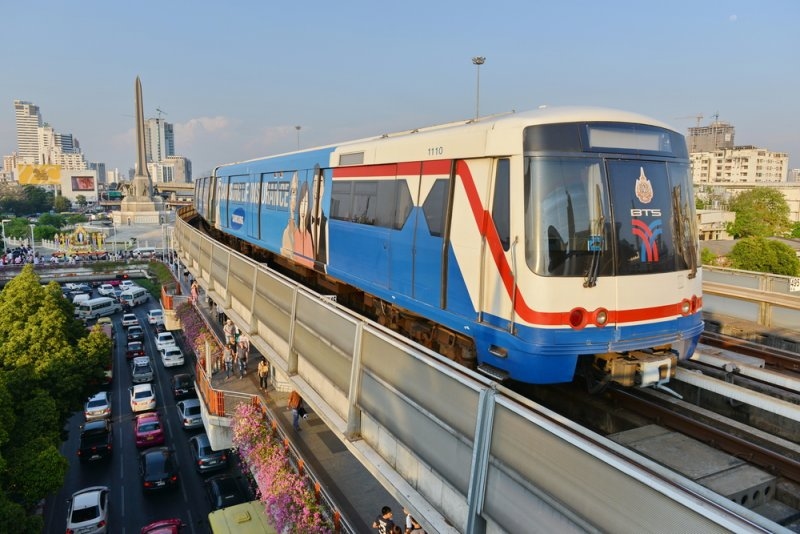
BTS Skytrain Bangkok is one of the most practical choices for everyday movement through central Bangkok. The elevated system avoids road traffic, which matters during morning and evening rush periods. Major shopping districts, business zones, and popular visitor areas are connected by BTS routes.
BTS Skytrain Bangkok is especially convenient for journeys where road traffic could turn a short distance into a long delay. Bangkok transportation becomes predictable here because travel time is less affected by street congestion. A simple example is travelling between major central shopping areas during peak hours; the train usually makes more sense than a road vehicle.
Bangkok public transport includes buses, trains, boats and other shared services. Buses can reach places not directly served by rail, although routes and traffic conditions can make them slower. River boats are another useful option, especially around riverside attractions and neighbourhoods.
Bangkok public transport is inexpensive compared with private rides, but it takes more attention. Check the route before boarding, keep smaller notes or suitable payment methods where needed, and allow extra time. Bangkok transportation is not always about speed. Sometimes the cheaper option is the sensible one.
How to get around Bangkok depends heavily on where you are staying and where you are going. Taxis are useful for door-to-door journeys, particularly when carrying luggage, travelling with a group or reaching areas away from rail stations.
How to get around Bangkok also means dealing with traffic. A taxi can be excellent for a short off-rail journey at a quiet time, then painfully slow during heavy congestion. Motorcycle taxis are faster through crowded streets but are better suited to travellers comfortable with two-wheel traffic. Bangkok transportation works best when road options are chosen selectively.
Don't Miss: Thailand Scams: Common Tourist Traps and How to Avoid Them
A quick comparison shows why no single mode covers every Bangkok journey. Distance, traffic, weather and location all change the practical choice.
| Transport option | Best for | Main advantage | Main drawback |
|---|---|---|---|
| BTS | Central areas | Avoids road traffic | Limited coverage |
| MRT | Cross-city rail trips | Fast and reliable | Not every district is served. |
| Bus | Local areas | Broad coverage | Traffic can slow trips. |
| Taxi | Door-to-door travel | Convenient | Traffic delays |
| Motorcycle taxi | Short busy-road trips | Very quick | Less comfortable for luggage |
| Riverboat | Riverside routes | Avoids road congestion | Limited route coverage |
Bangkok transportation becomes easier when you combine these rather than comparing them as if only one can be used. For instance, take the BTS to a convenient station, then use a taxi for the final stretch.
How to get around Bangkok efficiently is mostly about avoiding unnecessary road travel at the wrong time. Rail should usually be considered first for longer central journeys; taxis are more useful for short connections or places without convenient stations.
How to get around Bangkok is not a single-mode question. A visitor staying near a BTS station might use the train for most daytime sightseeing, then switch to a taxi for dinner somewhere farther away. That small change can remove a lot of wasted time.
Bangkok transportation also becomes easier when walking is included. A station may be only 10 or 15 minutes from a destination. There is no need to force a vehicle into every part of the journey.
Bangkok transportation changes during rush hours. A route that looks simple on a map can become slow when major roads fill up. BTS and Bangkok MRT are therefore useful for many peak-period journeys because they are not trapped in normal road queues.
During quieter periods, taxis become more practical. Still, check the estimated journey time before leaving. Bangkok transportation rewards flexibility; sticking stubbornly to one option can make a simple trip unnecessarily long.
Suggested Reading: A First-Timer's 3-Day Bangkok Itinerary for Temples & Food
A few small habits make Bangkok transportation easier, particularly during a first visit. Keep your destination written in Thai when possible, especially for taxis or smaller local destinations.
Bangkok public transport can feel confusing initially because several systems overlap without covering exactly the same places. After a few journeys, the pattern becomes clearer. Bangkok transportation is easier when you think in segments instead of expecting one vehicle to take you everywhere.
The best option changes with the purpose of the trip. A solo traveller carrying a small bag has different needs from a family heading to a hotel with luggage.
| Situation | Practical choice |
|---|---|
| Central sightseeing | BTS or MRT |
| Heavy traffic period | BTS or MRT |
| Riverside sightseeing | Boat |
| Hotel with luggage | Taxi |
| Short local connection | Taxi or motorcycle taxi |
| Areas away from rail | Bus or taxi |
For example, Bangkok MRT can handle the main part of a city journey, while a taxi handles the final kilometres. BTS Skytrain Bangkok can do the same from another direction. This mixed approach saves time without making every journey complicated.
Also Read: Bangkok Taxi Tips for Safe City Travel in Thailand
Once you see all the transport options as pieces of a bigger puzzle, it starts making sense. BTS and MRT get you through most main areas. Buses fill the holes. Boats come through near the river, and taxis get you door to door.
When traffic jams up, public transport almost always wins. If you’re lugging bags or don't want to walk in the heat, taxis make sense for short runs. There’s no hard rule—it all depends on your route and timing. Mix and match, build in a little buffer for traffic, and focus on what’s easiest. That’s really it.
You can bring luggage on Bangkok trains. But if you've got a bulky bag, rush hour can be rough. Try travelling outside the jams—it’s less hassle.
Yes, you’ll find taxis running late, but how quickly you find one depends on where you are. Entertainment areas usually have cabs everywhere. Residential neighbourhoods sometimes don’t.
Absolutely. Families do it every day. Just pay attention to crowd size, how far you have to walk, and whether stations are stroller-friendly before picking a route.
Not really. Signs at main stations and route maps are usually in English. Still, if you’re catching a taxi, having your destination in Thai can speed things up.
You don’t need a paper map—phones do the trick for most people. It’s handy to have a small offline map, just in case your signal drops. Otherwise, go digital.
This content was created by AI